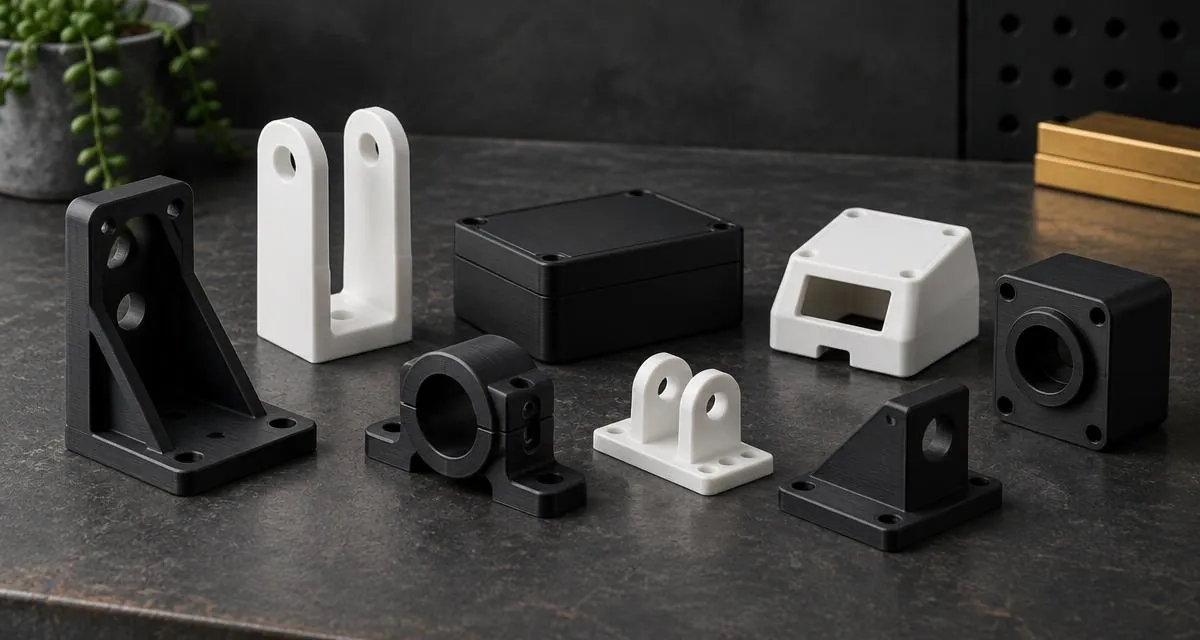
print farm vs injection moulding starts with an agreed application, approved file and realistic production plan. This guide explains the decisions to make before accepting a batch quote.
Compare manufacturing decisions, not slogans
The useful comparison is not whether printing or moulding is better in every situation. It is which process fits your current design, demand and application. A product maker with uncertain sales faces a different decision from a manufacturer releasing a stable component into an established supply chain. Printing avoids dedicated mould tooling for each revision, while injection moulding can support efficient repeated manufacture after the tooling and process are validated. Both involve preparation, inspection and material choices. Frame the decision around the complete cost of getting acceptable parts into use, including delay and change risk, rather than a headline machine capability or an isolated unit-price claim.
Define the bridge-production objective
Bridge production fills a specific gap: parts are needed while the final manufacturing route is being prepared or demand is still being tested. State what the bridge run must prove. It might confirm fit, support a launch, enable field feedback or keep an assembly line moving while replacement tooling is developed. The objective should also define what is not yet established. Printed parts may differ from moulded versions in surface finish, orientation-dependent behaviour and material processing. Discuss those differences before describing the batch as representative of a final product. The batch manufacturing service reviews the application and planned run together before accepting production.
Include tooling and design-change exposure
Injection tooling is a project of its own, with design review, manufacture, trials and acceptance. If a part changes after that commitment, modifying the tool can affect both budget and release timing. Printing does not remove design effort, but it can allow an approved digital revision to be assessed without a dedicated mould for that shape. Compare the likelihood and consequences of change. An apparently cheaper moulded unit may be the wrong answer when the team expects to revise a clip or connector after field testing. Conversely, an established design with predictable ongoing demand may justify a tooling pathway. Ask for complete commercial estimates rather than assigning invented break-even numbers.
Consider stock, demand and storage
Manufacturing economics should include the cost of parts that are never used. A large inventory purchase can create storage requirements and leave obsolete stock when the product changes. Printed batches may support a more measured release, although production availability still needs planning and cannot be assumed on demand without agreement. Forecast what you actually expect to sell or consume and identify seasonal variation. If a staged order suits the business, discuss releases and packing responsibilities before acceptance. Published print quantity tiers help compare current-job estimates, but a larger discount alone does not make a larger purchase sensible. Inventory is a working-capital decision as well as a manufacturing one.
Review material behaviour across processes
A filament category and a moulding resin category can share a familiar name without producing identical finished behaviour. Processing, additives, moisture condition and part structure all matter. Printed components have layer orientation and toolpath effects that should be reviewed for the intended load. Moulded components have their own concerns, including flow, shrinkage and tool-driven design constraints. Do not transfer performance claims from one process to the other without suitable evidence. Tell the studio what property matters and how it will be tested. If the product is regulated, safety-critical or mechanically demanding, obtain appropriate professional validation rather than relying on a general materials comparison to establish compliance.
Design the printed version deliberately
A bridge design should use the strengths and acknowledge the constraints of its manufacturing route. Consider layer direction around loaded features, space for support removal and access to inserts or fasteners. Do not assume that an unchanged mould-oriented shape is the most reliable printed shape. At the same time, avoid changes that invalidate the purpose of the trial if it must represent a future moulded assembly. Mark the essential interfaces and discuss acceptable differences. A physical first article helps evaluate the compromise. The print farm workflow connects orientation, finish and inspection to an agreed result before a production run is scaled.
Compare finish against the actual customer expectation
Raw FDM parts usually show layer lines and may have support-contact marks. A good print can still look different from a moulded consumer product. Decide whether that is acceptable for your application and make photography or product descriptions reflect the approved finish honestly. Sanding, priming or other agreed finishing can add work but should not be assumed to erase every manufacturing characteristic. If the surface is part of the product experience, approve it physically before the batch. A hidden fixture face and a highly visible retail enclosure need different acceptance criteria. Comparing only smooth marketing photographs hides the decisions that determine the finished result.
Build a meaningful cost comparison
Ask each supplier to identify preparation, manufacturing, inspection, finishing, packing and freight. Establish whether the quote includes samples and how design revisions are treated. Compare total acceptable parts delivered, not just the theoretical price of a piece before rejects and logistics. For printing, model geometry and machine duration can outweigh simple material mass. For moulding, tooling and validation may dominate the initial decision. There is no universal batch quantity where one route becomes cheaper. The crossover depends on the specific part, commercial terms and required quality. Use the printing cost guide to understand the drivers, then obtain reviewed quotes for the same brief.
Approve a transition plan
If you intend to move from printed bridge parts to moulded production, decide how the transition will be validated. The printed sample can establish an assembly relationship but does not automatically validate the final resin, tooling or finish. Keep design revisions and acceptance records separate so the team can identify which physical sample belongs to which process. Communicate changes to customers or downstream teams where they affect fit, appearance or performance. Avoid mixing unlabelled versions in the same stock location. A planned transition includes receiving checks and disposition of remaining bridge stock, not simply a decision to stop printing once the new manufacturing route becomes available.
Choose the process that answers the next question
Printing often makes sense when design flexibility, low commitment and a controlled trial matter more than a mature mass-production unit price. Moulding deserves consideration when the part, resin, quality requirements and sustained demand justify the tooling route. The right next step may be a sample and a reviewed production estimate rather than a permanent manufacturing choice. Share your model and intended use with Plate Nine through the instant model quote, then discuss the uncertainties the batch should resolve. Useful manufacturing advice acknowledges the limits of both processes instead of treating a print farm as a substitute for every other production method.