batch 3D printing Australia — production planning
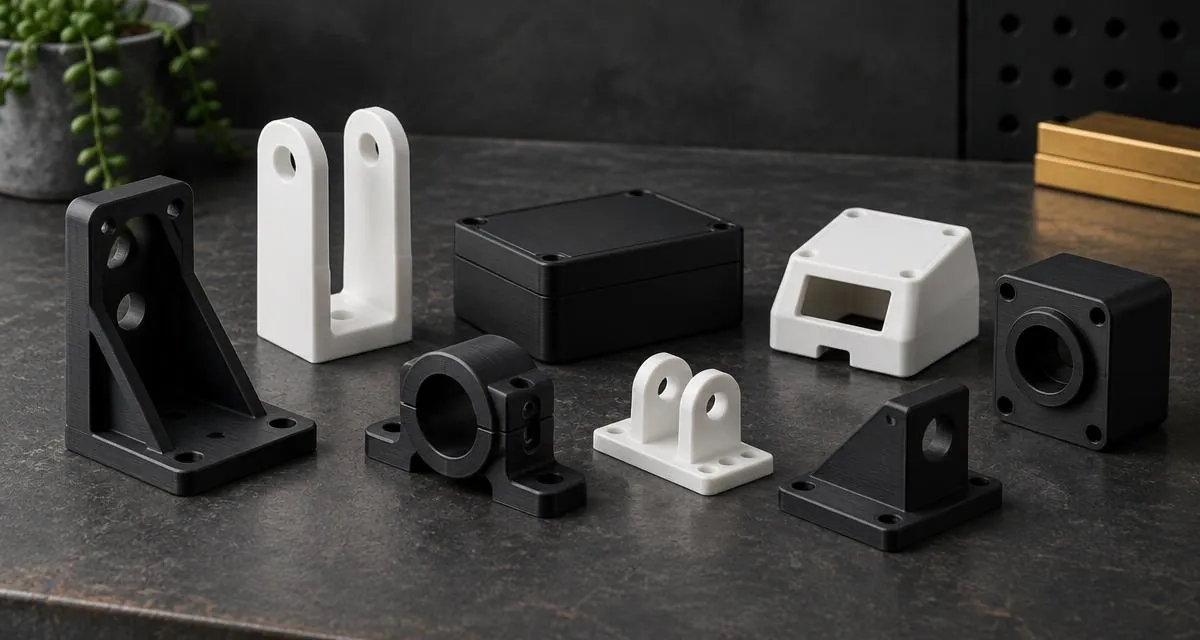
Batch printing is useful when you need saleable or functional parts before committing to a mould. It supports changing designs, uncertain demand and multiple product variations without requiring dedicated injection tooling for each revision. Plate Nine reviews the part, quantity and intended application together, then plans production at our Guildford studio. The batch range below is driven by current capacity settings, not a promise that every geometry can be manufactured on the same schedule. A compact bracket and a large enclosure have different machine-time requirements. We confirm the practical run size and schedule after reviewing your model and packing requirements.
Bridge production versus injection moulding
Injection moulding can make sense once demand, design and material requirements are stable enough to justify tooling. Printed bridge production serves a different purpose: getting parts into use while you test demand, refine fit or prepare the next manufacturing process. Do not compare only a headline unit price. Include tooling, design changes, storage, rejected stock and the cost of delaying a launch. Printed parts also behave differently because of layer direction and material processing. We discuss those limitations openly. If the design will eventually be moulded, identify which features are temporary and which need to remain consistent across manufacturing methods.
Prepare a clean and unambiguous model
Upload the model at its intended scale, using a supported mesh format and a clear filename that identifies the approved revision. Check that surfaces form a closed solid and remove unintended internal geometry. Separate assemblies into printable components unless they are designed to print in place. Send a drawing for critical dimensions rather than expecting the mesh alone to communicate acceptance criteria. Tell us about inserts, fasteners, adhesive faces and visible surfaces. If you are unsure whether a thin wall or unsupported feature will survive, flag it before ordering. We can review printability and propose changes, with your approval before production.
Plate optimisation without sacrificing consistency
Packing more parts on a build plate can reduce handling effort, but it is not always the best route to a reliable run. Orientation changes strength, visible layer lines and support contact. Tall slender pieces may need additional adhesion, while delicate features can be affected by travel paths and support removal. We plan spacing and orientation around the approved result, then review whether repeating that arrangement makes sense for the batch. A dense plate should not become a reason to accept poor surface quality or difficult clean-up. Multi-material work also needs allowance for purge structures and the consequences of a failed print.
Approve the first article and lock the revision
A first-article sample gives you a physical reference before the complete run begins. Test it in the actual assembly or environment, not just on a desk. Check fastener access, cable routes, mating faces and the surfaces your customer will touch. We document the agreed model revision, material, colour and relevant print settings so the approval has a useful reference. If you change the design after approval, we review whether another sample is needed. The production schedule starts from that agreement. This avoids an ambiguous situation where a new file is supplied midway through a run without an accepted physical result.
Volume estimates that reflect your order
Our instant print quote applies the quantity breaks published on this page. They count the units in the current job and make the estimated saving visible before you request studio review. The minimum order and maximum batch figures come from the same shared settings. Finishing, special inspection, assembly and unusual packaging may require a separate confirmed quote. Order a sensible quantity for your demand rather than buying stock simply to reach a discount. For recurring requirements, discuss a staged schedule with us: planned repeat releases can reduce storage pressure while allowing the studio to organise material and production availability.
Inspection, release and Australia-wide freight
Before dispatch, we check the agreed features, count the parts and separate different revisions so your receiving team can identify them. Tell us whether you need labelled bags, grouped kits or plain packing for resale. Fragile projections and cosmetic faces require protection rather than loose bulk packing. Production and transit are separate parts of the schedule, and remote destinations may need additional freight allowance. The national printing page shows admin-maintained state delivery estimates. If you sell finished products, our small-business service explains repeat ordering and direct shipping. Other print operators can use the partner programme for overflow or specialist work.